
Defining Cisgender (and Why It Matters)
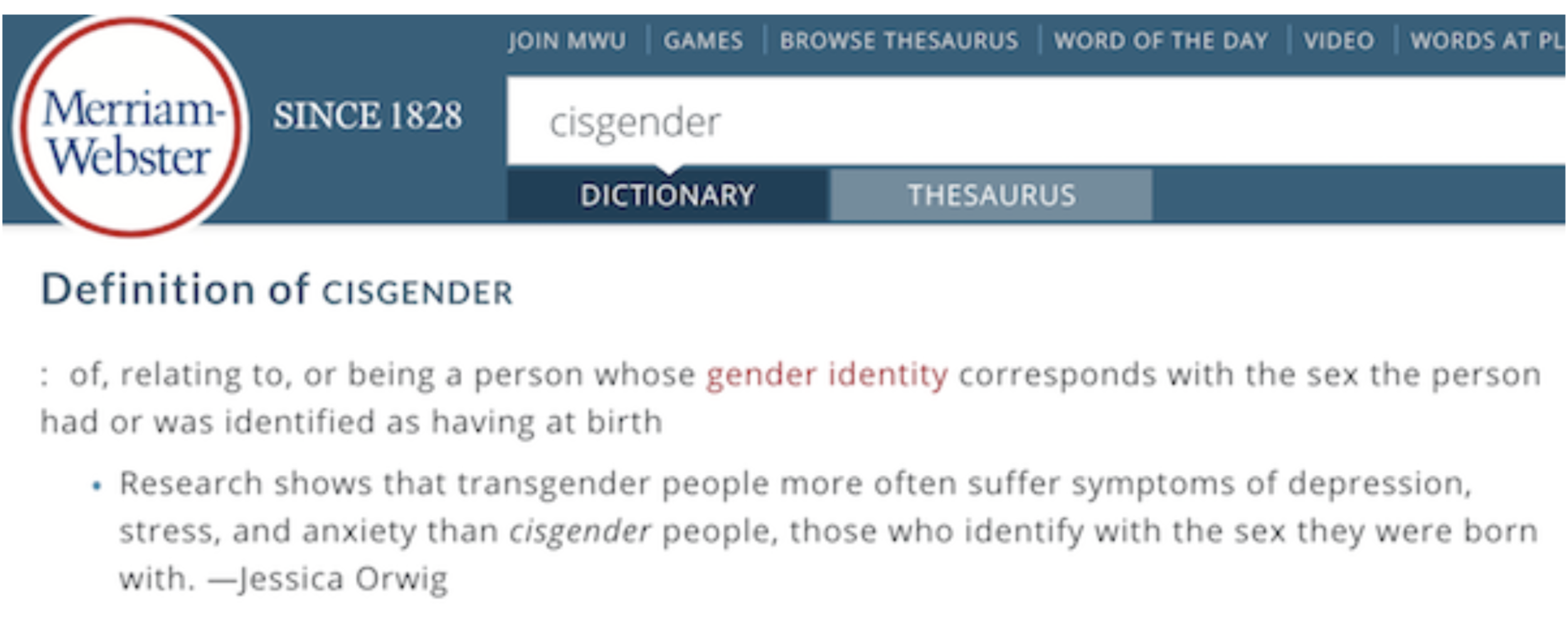
When our team leads a training, one of the things we address early on is language and terminology. Many people now know the very basic definition of what "transgender" means and thanks to Caitlyn Jenner, can name one trans person. However, a relatively new term that many are surprised to learn is "cisgender," a word now defined in most major dictionaries.
In short, cisgender is defined as someone whose gender identity matches the body they are born with. Most of the world is cisgender. Cisgender is used instead of simply saying "not transgender" because that implies that being transgender is abnormal.
Cisgender originated with biologist Dana Leland Defosse who first used it back in 1994. Etymologically speaking, "cisgender" is a direct antonym of "transgender. " Since both terms share Latin roots, they are quite clearly descriptive:
Cis (Latin for 'on this side of') gender
Trans (Latin for 'on the other side of') gender
Sometimes cisgender is shortened to "cis", so if you hear someone self-identify as a "cis woman" you now know what that means. You might also hear someone referred to, or identify, as "cis het" which means cisgender and heterosexual.
We talk about this term (and a whole bunch others) in our workshops Over the Rainbow: Tools to be an Authentic LGBTQ+ Ally and Blurred Lines: How to Navigate the Fluid Boundaries of Gender.
Want to keep learning? Read this post How and Why to Share Pronouns at Work.
Want More of This?
Get 5 stories on inclusion and leadership every Saturday. Real stories. No lecture. Join the thousands of readers who start their weekend with good vibes.